
Pruning
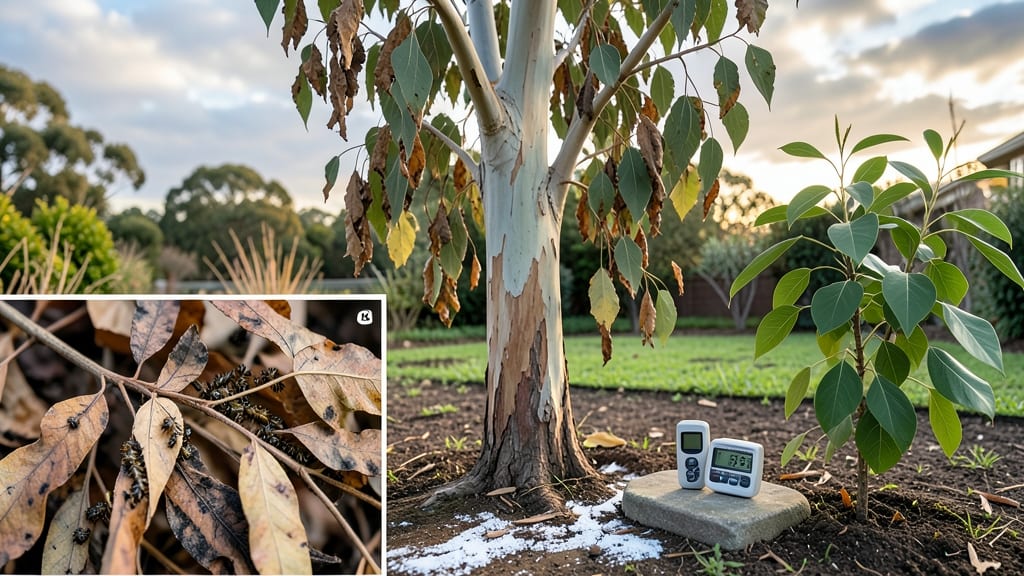
Your eucalyptus tree isn’t quite at the point of eucalyptus tree death yet—it’s just screaming for help. 🌿 I’ve nursed back more than my share of struggling eucalyptus, and the difference between saving it and losing it often comes down to spotting the right problem early.
Fungal rot, drought stress, or psyllid infestations can turn a thriving tree into a sad skeleton in just a few months, but with the right moves, you can turn it around.
The first step is diagnosing the issue: check the bark for lesions, inspect leaves for yellowing or holes, and dig into the soil to see if roots are mushy (root rot) or dry as dust (drought).
Most people skip this step and jump straight to watering—or worse, giving up. A simple soil test or close look at the foliage can tell you exactly what’s wrong, and that’s where the rescue begins.
Once you know the problem, the fixes are surprisingly straightforward: prune dead branches to improve airflow, amend the soil with compost or sand (depending on drainage), and treat fungal issues with copper-based sprays.
Within weeks, you’ll see fresh green growth pushing through, and that first sign of life is the best feeling in the world.
This works for both young trees and mature ones, though larger trees may need more aggressive pruning. The key is consistency—don’t expect miracles overnight, but with the right care, your eucalyptus can bounce back stronger than ever. Let’s get it growing again.
📚 In This Guide
- What you need
- Instructions
- Tips and common mistakes
- Wrapping up and next steps
What you need
- ● Pruning shears or loppers – Choose bypass pruners (sharp, clean cuts) for smaller branches (up to ½ inch thick). For thicker branches (½ to 2 inches), opt for loppers with a 4- to 6-foot handle for leverage.
- ● Hand pruners – For fine-tuning small twigs and dead growth (ensure they’re sterilized with rubbing alcohol to prevent disease spread).
- ● Pruning saw – A bow saw or curved pruning saw for branches thicker than 2 inches. Look for a fine-toothed blade (10-12 teeth per inch) to avoid tearing bark.
- ● Heavy-duty gloves – Leather or cut-resistant gloves (eucalyptus branches can be sharp!).
- ● Safety glasses – Protect your eyes from debris and sap splatter.
- ● Disinfectant (70% isopropyl alcohol or bleach solution) – Clean tools between cuts to prevent fungal/bacterial spread.
- ● 5-gallon bucket or tarp – For collecting pruned branches and debris.
- ● Watering can or hose with a gentle spray nozzle – For post-pruning hydration (aim for 1-2 gallons per tree after trimming).
- ○ Fertilizer (optional but recommended) – A balanced, slow-release fertilizer (10-10-10 or 6-6-6) to replenish nutrients. Follow package instructions for dosage.
- ○ Mulch (optional) – 3-4 inches of organic mulch (wood chips or bark) to retain moisture and regulate soil temperature.
- ● Check local regulations – Some areas require permits for tree pruning, especially if the tree is large or near power lines.
- ● Assess the tree’s health – Look for signs of pests (possums, borers), disease (fungal spots, oozing sap), or physical damage (cracks, broken branches) before starting.
- ● Choose the right time to prune – Late winter or early spring (when the tree is dormant but before new growth) is ideal.
- ● Clear the workspace – Remove any obstacles (patio furniture, toys, or pets) within a 10-foot radius of the tree.
Step-by-step guide to reviving a dying eucalyptus tree
Here’s how I’ve brought back struggling eucalyptus trees—focus on root health first, then adjust care.
🌱 Step 1: Assess the Root Zone for Water Stress
Eucalyptus trees often die from overwatering or underwatering, so start by checking the soil 12 inches deep with a trowel. If the soil feels bone-dry, your tree’s been neglected. If it’s soggy or smells like rot, roots are drowning. Dig a small trench around the base to inspect for dark, mushy roots—a sign of root rot.
Gently loosen compacted soil around the roots with your fingers. Eucalyptus roots need well-draining soil—if the area feels like clay, mix in 2-3 inches of coarse sand or perlite into the top 6 inches of soil. Water deeply only if the soil is dry, then wait until the top 2 inches feel dry before watering again. Overwatering kills eucalyptus faster than drought.
☀️ Step 2: Adjust Light and Prune for Airflow
Eucalyptus trees crave full sun (6+ hours daily)—if yours is in shade, it’ll struggle. Move it to a sunnier spot if possible, but do it gradually over 2-3 weeks to avoid leaf scorch. If the tree is already in full sun, check for leaf drop or yellowing, which could mean pests or fungal issues from poor airflow.
Prune back dead or crowded branches using sterilized pruners, cutting just above a leaf node. Remove no more than 25% of the canopy at once—eucalyptus trees stress easily. Thin out branches to let light and air circulate, especially in the inner canopy. This prevents fungal diseases like powdery mildew, which turns leaves white and weakens the tree.
💧 Step 3: Fertilize Lightly and Monitor for Pests
Eucalyptus trees are light feeders—too much fertilizer burns roots. Use a balanced, slow-release fertilizer (10-10-10) at half strength in early spring. Scatter granules 6 inches from the trunk and water deeply to help them reach the roots. Avoid fertilizing if the tree is already stressed—wait until new growth appears.
Inspect leaves for sap-sucking pests like scale or spider mites (look for sticky residue or tiny webs). Spray infested areas with neem oil (mix 1 tbsp per gallon of water) or insecticidal soap. If pests are severe, repeat treatment every 5-7 days until they’re gone. Healthy eucalyptus trees repel pests naturally, so focus on reviving the tree first.
⏰ Step 4: Protect Against Cold and Wind Damage
Eucalyptus trees are tender to frost—if your tree is in a cold climate, mulch the base with 2-3 inches of wood chips to insulate roots. In winter, wrap the trunk with burlap if temperatures drop below 25°F. Even mature trees can suffer cold damage, which shows as brown, brittle leaves the following spring.
If your tree is in a windy area, stake tall branches temporarily to prevent wind burn (scorched leaf edges). Eucalyptus leaves are prone to desiccation—if they curl or crisp, move the tree to a sheltered spot or add a windbreak (like a lattice fence). Once the tree regains strength, it’ll tolerate wind better.
🌿 Step 5: Wait for New Growth and Adjust Care
After 4-6 weeks of proper care, watch for new leaves at the branch tips—this is your sign the tree is recovering. If no growth appears after 8 weeks, reassess: root rot, pest damage, or soil issues may still be present. In that case, dig up a small section of root to check for rot or girdling roots (roots circling the trunk).
Once the tree stabilizes, reduce watering—eucalyptus trees prefer dry spells between waterings. Let the soil dry out completely between deep waterings. Avoid pruning again until spring, when the tree is actively growing. With patience, your eucalyptus can bounce back—I’ve revived trees that looked dead for years using these steps.
Tips & tricks for reviving a struggling eucalyptus tree
Real talk: I've seen eucalyptus trees that looked hopeless come back to life with these targeted adjustments. Here's what nobody tells you about the details that make all the difference.
Soil Test First: Before you do anything else, grab a handful of soil from the root zone. If it crumbles easily, you're dealing with drought stress. If it sticks together like mud, you've got overwatering or root rot. The key is that 12-inch depth check—this is where eucalyptus roots need to breathe. I've dug up trees where the top 6 inches were dry but the lower 6 inches were waterlogged, and that's what was killing them.
Pruning Precision: When you're thinning those crowded branches in Step 2, cut just above a leaf node where new growth can emerge. I learned this the hard way—cutting too close to the trunk creates wounds that invite fungal infections. And remember, never remove more than 25% of the canopy at once. Eucalyptus trees handle stress poorly, and you want them focused on recovery, not fighting back.
Fertilizer Timing: That half-strength 10-10-10 fertilizer? Apply it only when you see new growth starting. I've seen people over-fertilize stressed trees thinking it would help, but it just burns the roots. Wait until you notice those tiny new leaves at the branch tips—usually around 4-6 weeks after your initial care. And always scatter those granules 6 inches from the trunk, not right against it.
Cold Protection Hack: For that 25°F threshold, I've found wrapping the trunk with burlap works best when combined with mulching. The mulch insulates the roots while the burlap protects the trunk itself. Pro tip: use a thick layer of mulch—2-3 inches—and keep it several inches away from the trunk to prevent rot. I've saved many a tree from winter damage using this combo.
Pro Tips for Eucalyptus Tree Death
- Real talk: I've seen eucalyptus trees that looked hopeless come back to life with these targeted adjustments.
- Soil Test First: Before you do anything else, grab a handful of soil from the root zone.
- Pruning Precision: When you're thinning those crowded branches in Step 2, cut just above a leaf node where new growth can emerge.
Frequently asked questions
Why is my eucalyptus tree dying?
Eucalyptus trees often die from root rot, overwatering, pests (like psyllids or borers), or poor soil drainage. Yellowing leaves, wilting, or bark peeling are red flags. Check soil moisture and inspect for pests—act fast to save it!
How long does it take for a eucalyptus tree to die if neglected?
If neglected, a eucalyptus tree can decline in weeks to months, depending on the cause. Root rot or severe pest infestations may kill it in 4–8 weeks, while drought stress takes longer. Early intervention (pruning, water adjustments, or treatment) can reverse damage.
Can I revive a eucalyptus tree with too much water?
Yes! Drainage fixes are key: amend soil with sand/perlite, raise the root zone, or install a French drain. Reduce watering immediately—eucalyptus prefers dry soil. Trim dead branches to redirect energy. Monitor for 2–3 months for recovery signs.
What’s the best alternative if my eucalyptus keeps dying?
Try drought-tolerant trees like olive, jacaranda, or Texas ebony—they thrive in similar climates. For shade, live oak or sycamore are hardy. Ensure proper spacing and soil prep to avoid repeat issues. Native species often adapt better to local conditions!
How do I tell if pests are killing my eucalyptus?
Look for holes in bark, sawdust-like frass, or sticky sap (aphid sign). Psyllids cause curled leaves; borers create tunnels. Use neem oil or insecticidal soap for mild cases. For severe infestations, consult an arborist for systemic treatments.
Wrapping up and next steps
Watching your eucalyptus tree struggle can feel heartbreaking, but with the right care, revival is absolutely possible! 🌱 From diagnosing the root cause to pruning and nurturing, each step brings your tree back to life. Don’t wait—start today, and your eucalyptus could be thriving in no time.
Next step: Pick one action from this guide—whether it’s checking soil moisture, trimming dead branches, or adjusting watering habits—and tackle it this weekend. Your tree will thank you for it!