
Container Gardens
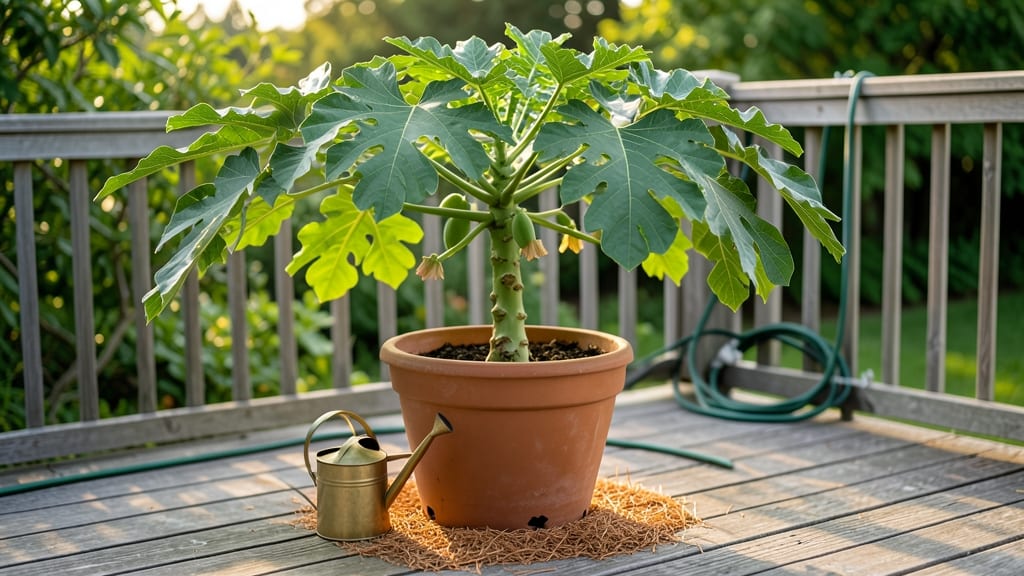
Yes, papaya trees can be grown in pots with the right conditions: use at least a 15-gallon container, prioritize drainage holes, and select well-draining soil. While fruit production will be smaller than in-ground trees, container cultivation works well in warm climates with consistent sunlight and humidity.
Container gardening for papaya trees succeeds when you mimic their tropical needs in a confined space. 🌱 The key is balancing root space with airflow—smaller pots restrict growth, while larger containers (20+ gallons) improve stability and yield.
I've found dwarf varieties like 'Solo' thrive in 15-gallon pots, producing fruit half the size of in-ground trees but with similar flavor. For best results, use terracotta pots (they wick moisture) and fertilize monthly during growing season with a balanced organic mix.
Sunlight is non-negotiable: papayas need 6+ hours of direct sun daily, and humidity levels above 50% prevent leaf scorch. In dry climates, mist leaves twice daily or place the pot on a humidity tray.
Pruning spent flowers encourages bushier growth, and winter dormancy (if in cooler zones) requires moving pots indoors where temperatures stay above 55°F. The trade-off? Potted papayas fruit later (18-24 months vs 12 months in-ground) but reward patience with manageable size and vibrant foliage.
💡 In This Article
- Papaya Tree Container Requirements for Healthy Growth
- Maximizing Papaya Fruit Yield in Pots: Pro Tips
Papaya tree container requirements for healthy growth
Papaya trees thrive in containers because their root systems adapt to confined spaces when given proper conditions. The 15-gallon minimum rule exists because papaya roots need 12-18 inches of depth to support the tree's rapid vertical growth and fruit production.
Shallow pots (10 gallons) cause root binding, where roots circle the container instead of growing outward—this restricts water and nutrient uptake, leading to stunted growth and poor fruiting. 🌱 The science behind this is simple: roots need oxygen and space to explore for water and minerals, and compacted soil limits both.
Soil aeration becomes critical in containers. Papayas prefer a fast-draining mix (60% inorganic: 30% peat/coir, 10% perlite/pumice) to prevent root rot, which is their #1 killer in pots. The ideal mix mimics their native volcanic soils by combining organic matter with gritty amendments.
Terracotta pots are ideal because their porous walls allow excess moisture to evaporate, while plastic retains humidity better for tropical climates. For 20+ gallon containers, add a 3-inch layer of gravel at the bottom to improve drainage and prevent soggy roots.
Variety selection makes a huge difference in container success. Dwarf varieties like 'Solo' or 'Tainong No. 1' produce 1-2 pound fruits in 15-gallon pots, while standard types need 25+ gallons to bear fruit at all. The trade-off?
Dwarf trees fruit 6-12 months earlier than their in-ground counterparts. Root pruning (trimming circling roots every 6 months) stimulates new growth and prevents nutrient depletion, which is especially important for heavy feeders like papayas.
Nutrient cycling differs dramatically in containers. Without the vast soil ecosystem of in-ground planting, you must supplement with balanced organic fertilizer (10-10-10) every 4-6 weeks during growing season. Micronutrients like magnesium (for chlorophyll) and calcium (for cell walls) become critical in confined spaces.
A slow-release fertilizer pellet in the bottom layer provides steady nutrition, while foliar sprays with seaweed extract boost photosynthesis in crowded root zones.
The biggest misconception is that container papayas can't produce fruit. In reality, they do—but with 30-50% smaller yields than in-ground trees. This happens because confined roots limit the tree's ability to transport water and nutrients to developing fruit.
However, the flavor profile remains identical, with the same sweet-tart balance when ripened properly. The key is monitoring soil moisture: containers dry out 2-3x faster than ground soil, so check daily during hot weather.
For tropical climates, container papayas can produce 2-3 harvests per year with proper care. The first fruits appear at 18-24 months (vs 12 months in-ground), but subsequent harvests come 3-4 months apart.
This delayed fruiting is due to the energy the tree expends establishing its root system in the confined space. 🌿 The good news? Once established, container papayas develop stronger disease resistance than in-ground trees because their roots aren't constantly disturbed by weather or soil compaction.