
Trees
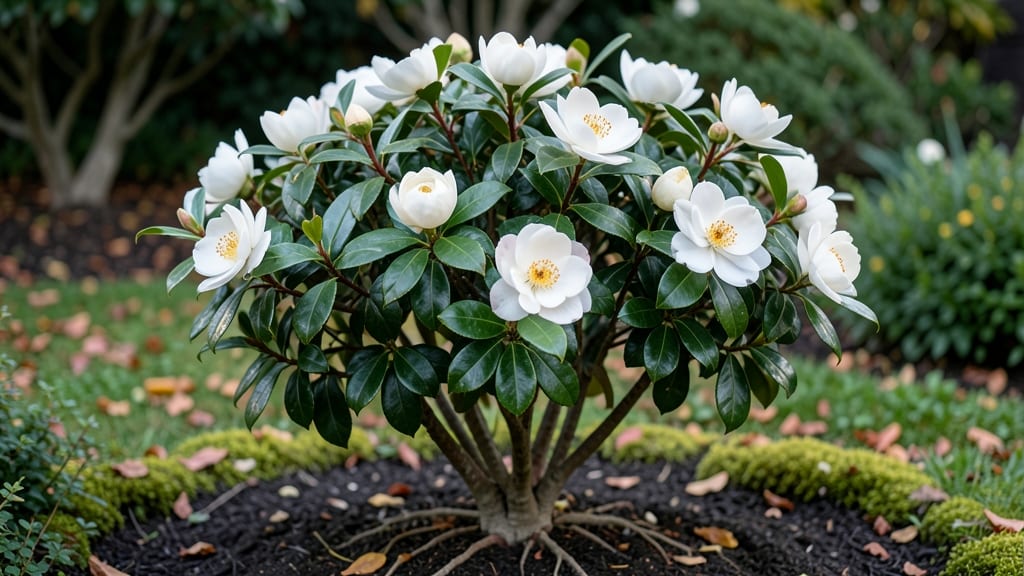
White camellia trees transform your yard into a winter wonderland when most gardens sleep. 🌸 I've learned the secrets to growing cold-hardy varieties like Camellia sasanqua 'Yuletide', which blooms from November through March—even in Zone 7 where frost is a threat.
The key is matching your variety to your climate: Camellia japonica thrives in milder zones, while sasanqua types handle cooler winters. Plant in partial shade with acidic, well-draining soil—and never let the roots dry out, but avoid soggy soil that invites root rot.
Prune right after blooming to shape without sacrificing next year's flowers.
📚 In This Guide
- What you need
- Instructions
- Tips and common mistakes
- Wrapping up and next steps
What you need
- ● Camellia Tree: 1–3 Camellia japonica or Camellia sasanqua white-flowering varieties (nursery-grown plants, 1–3 years old, 3–5 ft tall)
- ○ Optional: Seeds (if propagating from scratch—requires patience and stratification)
- ● Planting Site: Partially shaded area (3–6 hours of morning sun, afternoon shade)
- ● Well-draining, acidic soil (pH 5.0–6.5)
- ● Mulch (2–3 inches of pine bark, wood chips, or compost)
- ● Soil Amendments: Peat moss or compost (1 part per 2 parts native soil)
- ● Sulfur (for acidity adjustment, if needed)
- ● Tools: Trowel or shovel
- ● Garden gloves
- ● Watering can or hose with gentle spray nozzle
- ● Pruning shears (sterilized)
- ○ pH testing kit (optional but helpful)
- ● Slow-release fertilizer (acid-loving plant formula, e.g., 8-3-9 or 10-10-10)
- ● Epsom salt (for magnesium boost, 1 tbsp per gallon of water)
- ● Tree stakes & ties (for young or windy locations)
- ● Drip irrigation system (for consistent moisture)
- ● Fungicide (copper-based, for prevention of petal blight)
Step-by-step instructions for planting and caring for cold-hardy white camellias
Here’s how to establish your white camellia for winter resilience and vibrant, seasonal blooms.
🪴 Step 1: Select the Perfect Planting Site and Prepare the Soil
White camellias thrive in partial shade—think morning sun with afternoon shade—especially in hotter climates. Avoid full sun, which can scorch leaves and reduce blooms. I dig a hole twice as wide as the root ball but only as deep, because camellias hate being buried too deep—their roots need room to breathe.
Mix the excavated soil with 2 inches of organic compost and a handful of slow-release fertilizer (look for one with balanced NPK like 10-10-10). Camellias prefer acidic soil (pH 5.5–6.5)—if your soil tests higher, amend with sulfur or peat moss. Tap the roots gently to encourage them to spread into the amended soil before backfilling. Water deeply right after planting to settle the roots.
☀️ Step 2: Water Deeply and Establish a Mulch Barrier
Newly planted camellias need consistent moisture for the first 6-8 weeks—water 1-2 inches per week, more in extreme heat. I use a soaker hose to deliver water directly to the root zone without wetting the foliage, which prevents fungal diseases. Check soil moisture by sticking your finger 2 inches down; if it’s dry, water again.
Apply a 3-inch layer of mulch (pine bark or pine needles work best) around the base, keeping it 6 inches away from the trunk. Mulch retains moisture, regulates soil temperature, and slowly releases nutrients as it breaks down. Replenish mulch annually to maintain this protective layer—it’s the secret to winter survival.
✂️ Step 3: Prune Strategically for Shape and Winter Prep
Prune right after flowering (late spring) to shape the tree and encourage next year’s blooms. Remove dead, crossing, or weak branches first—camellias grow slowly, so every cut matters. For shaping, trim back no more than 1/3 of the branch length to avoid stress. I avoid heavy pruning in fall, as it exposes the plant to winter damage.
In late fall, give your camellia a light trim to remove any remaining spent blooms or damaged growth. This keeps the tree tidy and reduces winter stress. A balanced fertilizer applied in early spring (just as buds swell) gives the tree the energy it needs for another round of stunning white blooms.
🌿 Step 4: Protect from Winter Elements and Monitor for Pests
Cold-hardy white camellias tolerate down to 10°F, but younger plants or harsh winters may need extra care. Wrap the trunk with burlap if your area gets colder or windier, and add a light layer of mulch (up to 4 inches) around the base for insulation. Avoid heavy mulch piles, which can suffocate roots.
Watch for camellia scale or aphids in spring—they love tender new growth. I spray with neem oil (mixed per label instructions) at the first sign of pests. Healthy camellias are resilient, but early intervention prevents infestations from taking hold. A quick wipe-down of leaves with a damp cloth also removes dust and debris, keeping the plant thriving.
Tips & tricks for perfect camellia tree white planting and care
These insights will help you cultivate a thriving cold-hardy white camellia that blooms beautifully year after year.
Soil Preparation: When amending your soil with 2 inches of organic compost and slow-release fertilizer, consider adding a handful of cottonseed meal to further lower the pH if your soil tests above 6.5. This extra step ensures your camellia stays in its ideal acidic range (pH 5.5-6.5) without overdoing the sulfur. I've found that camellias planted in soil with a pH above 7 often struggle to thrive, even with other amendments.
Watering Strategy: During those first 6-8 critical weeks after planting, I've learned to check soil moisture twice daily during extreme heat—morning and late afternoon. This prevents both overwatering (which can suffocate roots) and underwatering (which stresses the plant). A simple soil moisture meter is worth the investment for this delicate period.
Pruning Precision: When shaping your camellia in Step 3, focus on removing branches that grow inward or cross others—this creates better airflow and prevents disease. I use sharp, clean pruners to make cuts just above a leaf node or bud, which encourages new growth. Avoid cutting into old wood, as camellias heal slowly from such wounds.
Winter Protection: For areas expecting temperatures below 10°F, consider wrapping the trunk with burlap AND adding a layer of straw mulch over the regular mulch. The straw provides extra insulation while allowing airflow to prevent moisture buildup. I've seen dramatic differences in survival rates with this double-layer approach during harsh winters.
Pro Tips for Camellia Tree White
- These insights will help you cultivate a thriving cold-hardy white camellia that blooms beautifully year after year.
- Soil Preparation: When amending your soil with 2 inches of organic compost and slow-release fertilizer, consider adding a handful of cottonseed meal to further lower the pH if your soil tests above 6.5.
- Watering Strategy: During those first 6-8 critical weeks after planting, I've learned to check soil moisture twice daily during extreme heat—morning and late afternoon.
Frequently asked questions
Got questions about growing the stunning camellia tree white variety? You’re not alone! Here are some of the most common queries—plus straightforward answers to help you nurture a thriving, cold-hardy beauty in your garden.
How cold-hardy is the white camellia tree, and can it survive winter?
The Camellia sasanqua (a popular white variety) typically thrives in USDA Zones 7-9, enduring temperatures down to 10°F (-12°C). For colder climates (Zones 6 or below), plant it in a sheltered spot or use mulch to protect roots. Young trees are more vulnerable—wrap them in burlap if frost is forecasted!
When is the best time to plant a white camellia tree?
For root establishment, plant in early spring or fall (4-6 weeks before the first frost). Avoid summer heat or winter freezing, as these stress young roots. If planting in containers, spring is ideal—just ensure the soil stays moist but well-drained.
Why aren’t my white camellias blooming? Troubleshooting tips?
White camellias often need 3-4 years to bloom, but here’s how to troubleshoot:
Too much shade? They need partial shade (3-6 hours of sun). Too little light = fewer flowers.
Over-fertilizing? Too much nitrogen = leafy growth, not blooms. Use a low-nitrogen, high-phosphorus fertilizer in early spring.
Pruning at the wrong time? Prune right after blooming (late winter/early spring) to encourage new buds.
Pro tip: If buds form but drop, it could signal drought stress or pests (like scale). Check leaves and adjust watering!Can I grow a white camellia in a container, or is it better in the ground?
Yes! White camellias thrive in containers if you choose the right variety (like Camellia sasanqua ‘Yuletide’). Use a large pot (15+ gallons) with well-draining soil and ensure it gets morning sun. In winter, move it to a protected spot or indoors (if temps drop below 20°F/-7°C). Pro tip: Keep soil consistently moist—containers dry out faster!
What pests or diseases should I watch for in white camellias?
Common issues include:
- Scale insects: Tiny bumps on stems/leaves. Treat with neem oil or insecticidal soap.
- Camellia gall wasp: Causes swollen growths on stems. Prune affected areas and sterilize tools.
- Fungal diseases (like petal blight): Caused by wet foliage. Improve airflow, avoid overhead watering, and use fungicide if needed.
Wrapping up and next steps
Growing a white camellia tree is a rewarding journey that brings beauty and resilience to your landscape—especially when you choose cold-hardy varieties like 'Winter’s Star' or 'White Cloud'. With the right soil, sunlight, and care, you’ll enjoy stunning year-round blooms that turn heads and lift spirits. 🌸
Ready to transform your garden? Start by selecting your favorite variety, gathering supplies, and planning your planting spot. Take the first step today—your future blooms will thank you! 🌱